


https://www.linkedin.com/pulse/bolt-vs-rebar-cutters-key-differences-coco-jin-ebrgc
While bolt cutters and rebar cutters are often found in the same toolbox and look somewhat similar, they are engineered for different levels of hardness and specific cutting geometries.
1. Blade Design and Material
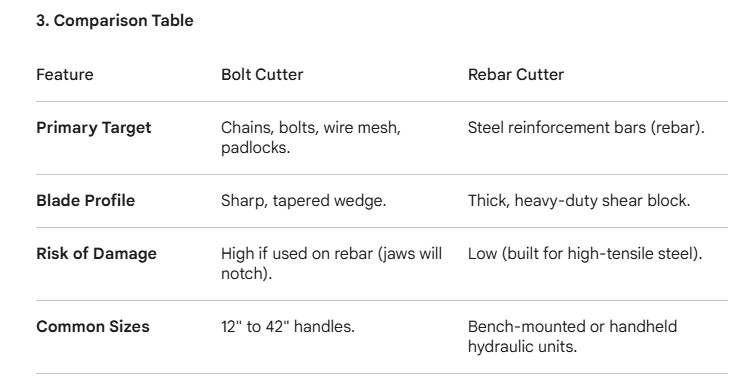
Bolt Cutters:Usually feature a center-cut or clipper-cut blade. The edges are ground to a sharp, thin wedge. They are designed to cut through soft to medium-hard metals like chains, padlocks, and bolts. Using them on extremely hard materials like rebar can often dent or nick the blades because the steel in rebar is often harder than the steel in the bolt cutters jaws.
Rebar Cutters: These utilize a "shear" or "heavy-duty bypass" design. The blades are much thicker and made from specialized alloy steel designed to withstand the immense pressure required to snap high-tensile reinforcement bars.
2. Functional Mechanism
The way these tools apply force differs based on the density of the target material.
Bolt Cutters (Manual): These rely entirely on a compound hinge system. The long handles act as levers to multiply the force of your arms. They are great for quick, mobile snips on hollow or solid cylindrical parts.
Rebar Cutters (Manual/Hydraulic): While manual guillotine-style rebar cutters exist, most professional versions are hydraulic. Because rebar is incredibly dense, manual leverage often isnt enough for larger diameters. Hydraulic cutters use a piston to slowly drive a blade through the bar, providing a much cleaner, safer break without the snap-back recoil often felt with bolt cutters.
Awesome! Share to:
Related Posts
- How to Choose a High-Quality Heavy-Duty Cable Cutter for Large Diameter Cables
- Happy Mid-Autumn Festival
- Back from Energy & Electrical Indonesia Exhibition! Thank you for connecting with us!
- Cutting ACSR & Steel Wire Rope: Why Blade Geometry and Metallurgy Matter More Than Force
- ? Tech Guide: How to Choose the Right Hydraulic Cable Cutter for Utility & Industrial Projects

First class quality service and professional after-sales team.
Get in Touch
*We respect your confidentiality and all information are protected.
By clicking 'Allow All', you agree to the storage of cookies on your device to enhance site navigation, analyze site usage and assist with our marketing efforts.