


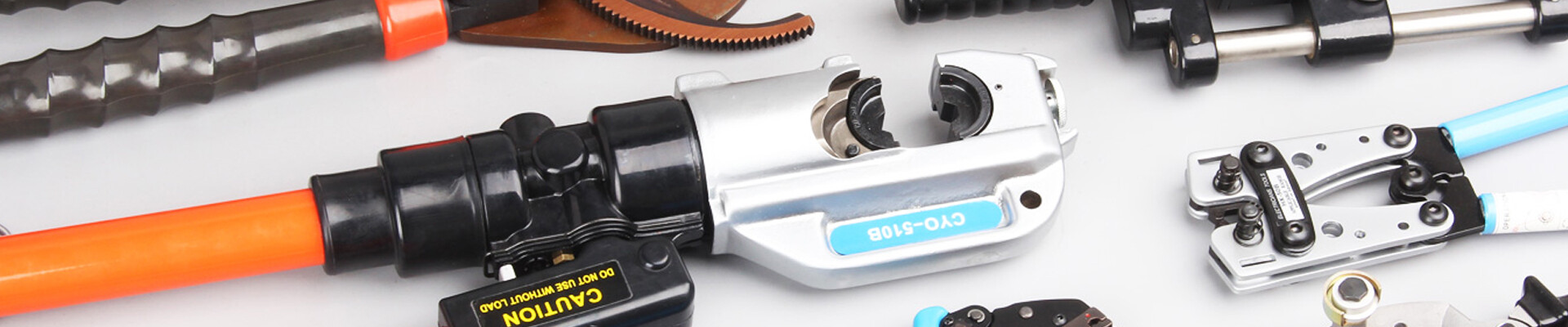
In the world of electrical transmission and distribution, the crimping tool is the technician's most critical asset. However, with the market flooded with options ranging from simple mechanical pliers to advanced 12-ton battery-powered hydraulics, making the right choice can be overwhelming.
Choosing a tool that is too small leads to operator fatigue and potential safety risks (under-crimping). Conversely, deploying a high-end battery tool for occasional light-duty work is an unnecessary drain on the budget. In this guide, we break down the three main categories of crimping tools to help you decide which fits your operation best.
1. Mechanical (Manual) Crimpers These are the traditional "plier-style" tools that rely entirely on the operator's hand strength and leverage.
- Best for: Small gauge wires (typically up to 16mm² or 6 AWG), DIY projects, and low-volume repair work.
- Pros: Lightweight, inexpensive, and require zero maintenance.
- Cons: As wire diameter increases, the physical force required becomes unmanageable. They are prone to inconsistent crimps if the operator is tired, leading to "hot spots" in electrical connection。
2. Hand-Pump Hydraulic Crimpers When mechanical leverage isn't enough, hydraulics step in. These tools use a pumping mechanism to generate massive force (often 6 to 12 tons) with minimal physical effort.
- Best for: Utility maintenance crews, medium-gauge cables (up to 400mm²), and remote sites where charging batteries isn't feasible.
- Pros: They deliver professional-grade compression force at a fraction of the cost of battery tools. They are compact and highly portable.
- Cons: Speed. Since they require manual pumping (often two-handed operation), they are slower than battery alternatives. They are not ideal for projects requiring hundreds of crimps per hour.
3. Battery-Powered Hydraulic Tools The gold standard for modern industrial projects. These tools use a motor to drive the hydraulic piston, completing a cycle in seconds with the push of a button
- Best for: Large-scale construction, switchgear assembly, and high-volume industrial wiring.
- Pros:
- Cons: Higher upfront investment and the need to manage battery charging.
So, which one do you need?
- Choose Mechanical if you are terminating small control wires occasionally.
- Choose Manual Hydraulic if you need portability and power on a budget, and speed isn't the primary concern.
- Choose Battery-Powered if your team is crimping all day, dealing with large diameters, or if project deadlines demand maximum efficiency.
Awesome! Share to:
Related Posts
- Back from Energy & Electrical Indonesia Exhibition! Thank you for connecting with us!
- Cutting ACSR & Steel Wire Rope: Why Blade Geometry and Metallurgy Matter More Than Force
- ? Tech Guide: How to Choose the Right Hydraulic Cable Cutter for Utility & Industrial Projects
- Electric & Power Indonesia
- Solar crimping tools with Max 10mm2 for MC4

First class quality service and professional after-sales team.
Get in Touch
*We respect your confidentiality and all information are protected.
By clicking 'Allow All', you agree to the storage of cookies on your device to enhance site navigation, analyze site usage and assist with our marketing efforts.